
- Client
- DGLAB — Directorate-General for Books, Archives and Libraries (Portuguese Government)
- Sector
- Public administration · Cultural heritage
- Delivered
- 2022. Rolled out from July 2022 across the DGLAB network
- Scope
- Single electronic desk serving all 18 archives under DGLAB, including the Torre do Tombo National Archive
- Users
- Any Portuguese citizen, plus DGLAB staff working under role-based profiles per archive
- Request types
- 7 — information, research, same-day consultation, advance booking, reproduction, certificate, annotation
- Key capabilities
- Digital archive integration, electronic payments, quoting and billing, quantitative reporting for process optimisation
- Live at
- crav.arquivos.pt
- External recognition
- Published as a case study by ESOP, the Portuguese Open Source Business Association
Portugal’s official state archives hold centuries of documents. Until recently, accessing them meant going in person, navigating bureaucratic processes, and waiting weeks for responses to basic requests. CRAV changed that. Built by Caixa Mágica Software for the Directorate-General for Books, Archives, and Libraries (DGLAB), CRAV is a digital platform that brings the official archives of the Portuguese Republic online, fully accessible to any citizen with an internet connection.
Since April 2012, Portuguese citizens have been able to search for documents and view digital reproductions through CRAV. When DGLAB decided to expand the platform, Caixa Mágica took the existing foundation and rebuilt what was needed: a complete front office and back office solution that turns a basic search portal into a fully functional public services platform.
CRAV Challenge: Modernising Access to Public Archives
A service that needed to grow
DGLAB manages Portugal’s official documentary heritage. Its archive holds records that citizens, researchers, legal professionals, and institutions need access to regularly. For years, that access was limited. Citizens could search the catalogue and view available digital reproductions, but most substantive requests still required physical presence or manual processing.
Clearly, that model was not sustainable. Portuguese public administration had been moving steadily toward digital service delivery, and CRAV was overdue for a renovation. The goal was not simply to update the interface. DGLAB wanted to expand the range of services available online, reduce dependence on in-person visits, and give citizens a single platform where they could handle archive-related requests from start to finish.
The complexity of public archive services
Archive services are not simple to digitise. Each type of request follows its own logic: a reproduction request works differently from a certificate request, which works differently from an in-person consultation booking. Some requests involve payment. Others require interaction with third-party systems. All of them need to be tracked, managed, and responded to by DGLAB staff.
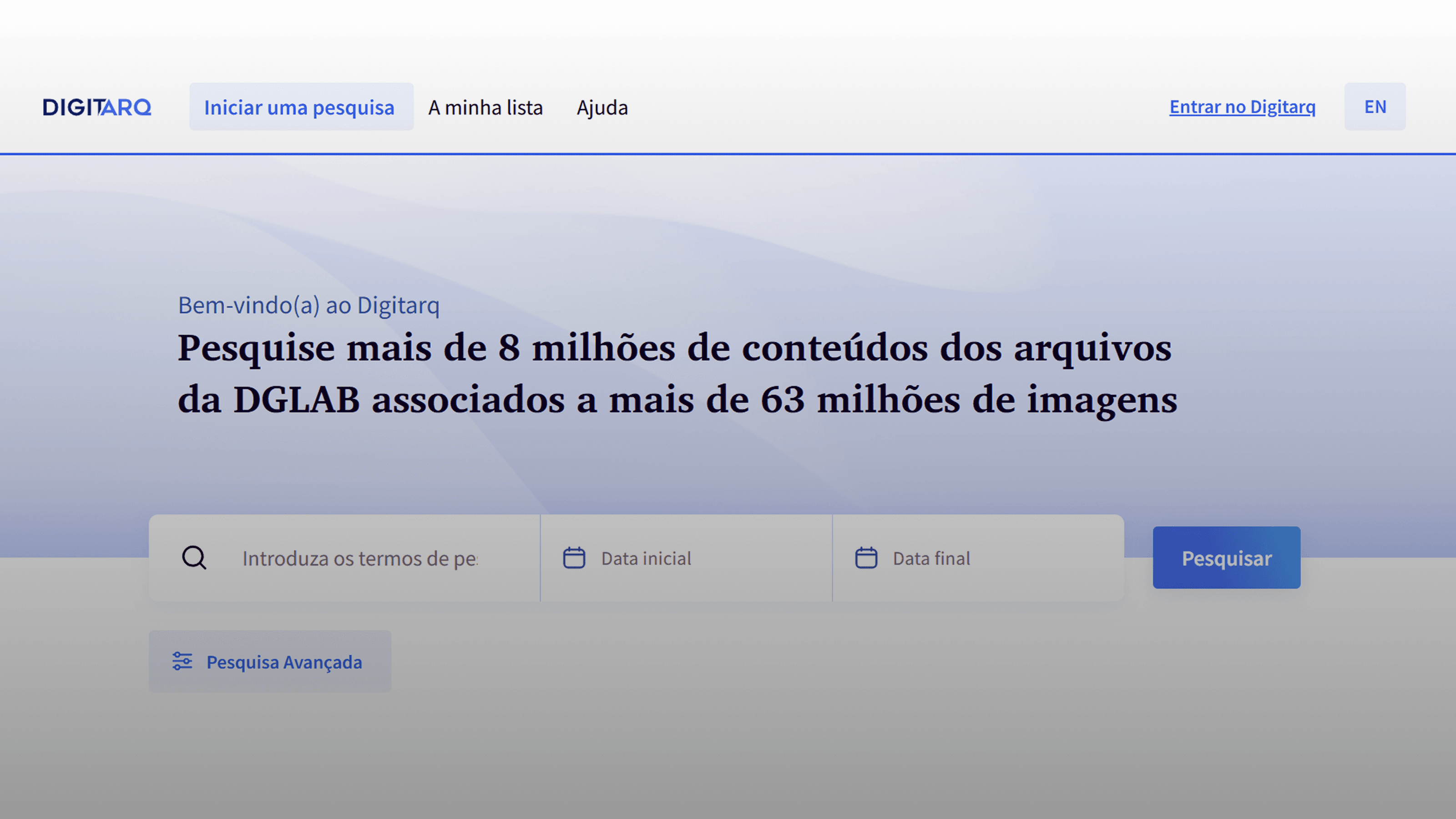
Building a platform capable of handling this range of services meant solving several problems at once: a citizen-facing interface that was clear and accessible, a back office that gave DGLAB staff full control over workflows, payment integration with national financial systems, and interoperability with Digitarq, the digital archive system also developed by Caixa Mágica.
Building the CRAV Platform
Front office: services for citizens
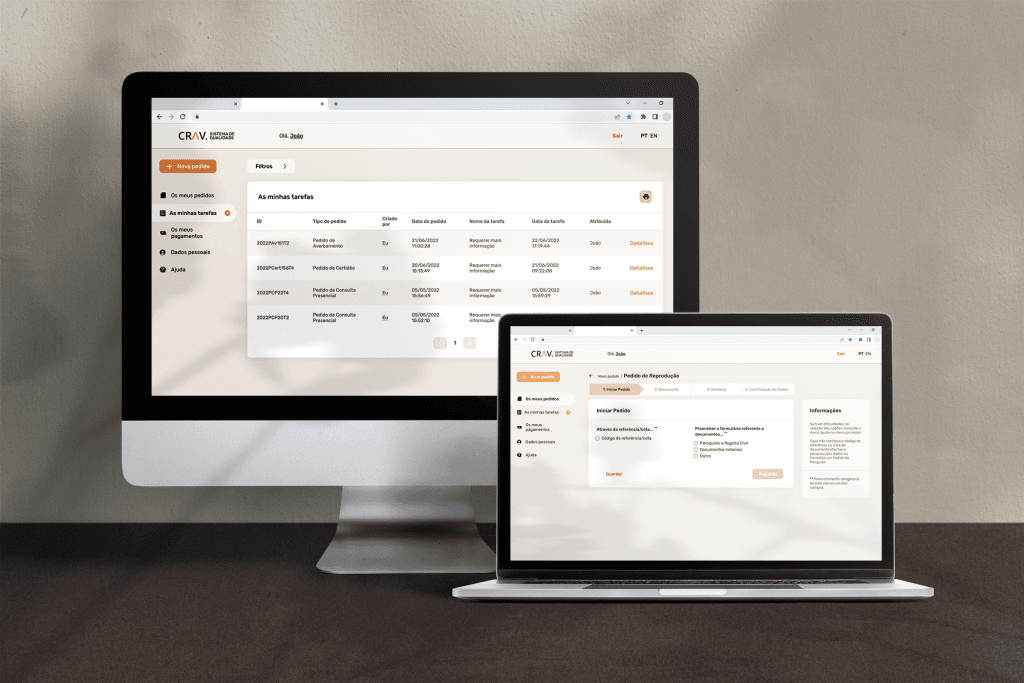
At the heart of the CRAV platform is a front office designed for the general public. Citizens arrive at the platform, search the archive catalogue, and can submit a range of requests without leaving their desk.
Requests available through the CRAV front office include:
- Information requests about archived documents
- Search requests
- Requests for in-person consultations
- Advance consultation requests with date scheduling
- Reproduction requests
- Certificate requests
- Annotation requests
Each of these follows a structured flow. Users know what they are requesting, what information is needed, and what to expect in return. For requests that involve a fee, payment is handled directly through integrations with Unicre and SIBS, Portugal’s main electronic payment infrastructure. No office visit or separate bank transfer is required. Payment happens within the platform, as part of the request process.
Back office: workflow management for DGLAB
Behind the citizen-facing interface sits a back office built for DGLAB staff. Every request submitted through CRAV flows into this system, where it is assigned, tracked, and processed.
Workflows in the back office are dynamic and automatic. When a citizen submits a request, the system routes it to the appropriate team without manual intervention. Staff can see the status of every open request, act on it within the platform, and send responses back to citizens through the same system. This eliminates the need for email chains, spreadsheets, or paper-based tracking.
The back office was built using Camunda, an open-source workflow and decision automation engine. Camunda handles the process logic: what happens when a request arrives, what steps are required, who needs to act, and in what order. This approach makes workflows transparent and auditable, which matters for a public institution that needs to account for how citizen requests are handled.
Integration with Digitarq
One of the defining features of the CRAV platform is its integration with Digitarq, the digital archive management system also developed by Caixa Mágica for DGLAB. This is not a simple data connection. When a citizen searches for a document through CRAV, the results come from Digitarq. Reproduction requests draw their assets from the same system. Staff processing requests in the back office are therefore working with records that live directly in Digitarq.
This integration means CRAV and Digitarq function as a coherent system rather than two separate tools. Citizens get accurate, up-to-date results because the search layer connects directly to the archive management layer. Staff do not need to switch between systems to handle requests. Everything is connected.
Built entirely on open source
Every component of CRAV was built on open-source technology. The front office runs on Next.js and React.js. The back end is built on Node.js with a MySQL database. Docker handles containerisation. Camunda manages workflow automation.
In practice, this approach was a deliberate choice. Open-source tools reduce licensing costs, avoid vendor lock-in, and give DGLAB full ownership of the platform. For a public institution that needs to maintain and evolve a system over many years, that independence matters. Any competent development team can work with the codebase because it is built on widely understood, well-documented technologies.
Responsive across all devices
CRAV works on mobile devices. This is not a minor detail for a public service platform. Many citizens, particularly those accessing services for the first time or from areas with limited desktop access, will use a phone or tablet. A platform that only functions well on a desktop excludes a meaningful portion of its intended audience.
Caixa Mágica built the interface to be fully responsive from the start, not retrofitted for mobile after the fact. Navigation, request forms, payment flows, and document viewing all adapt to the screen size of the device being used.
CRAV Impact: What Changed for Citizens and DGLAB
Archive access from anywhere
Before CRAV’s renovation, most substantive interactions with DGLAB’s archives required physical presence or manual follow-up. After the renovation, citizens can submit information requests, schedule consultations, order reproductions, and obtain certificates entirely online.
For researchers working remotely, legal professionals who need certified archive documents, or citizens who simply do not live near a DGLAB facility, this change is significant. Access no longer depends on geography or working hours. Requests can be submitted at any time, payments made immediately, and responses received through the platform.
Complete dematerialisation of archive processes
CRAV represents the complete dematerialisation of the process for accessing Portugal’s official state archives. From initial search to final delivery, every step can be completed digitally. In practice, this means fewer in-person visits to DGLAB facilities, faster processing times for standard requests, and a clearer record of every interaction between citizens and the institution.
Every request that comes through CRAV is logged, tracked, and available for reporting. Staff can see what citizens are requesting, how long requests take to process, and where bottlenecks occur. That information is useful for managing workload and improving the service over time
A closer relationship between DGLAB and citizens
One of the stated goals of the CRAV renovation was to increase the level of interaction and closeness between DGLAB and its users. A platform that handles requests, sends responses, processes payments, and delivers documents within a single interface creates a different kind of relationship than one that requires citizens to make phone calls, send emails, or visit in person.
Citizens who use CRAV have a complete record of their interactions with DGLAB in one place. They can track the status of open requests, download completed documents, and access their history. Consequently, the platform gives citizens a level of transparency over their interactions with a public institution that was simply not possible before.
A model for public sector digital transformation
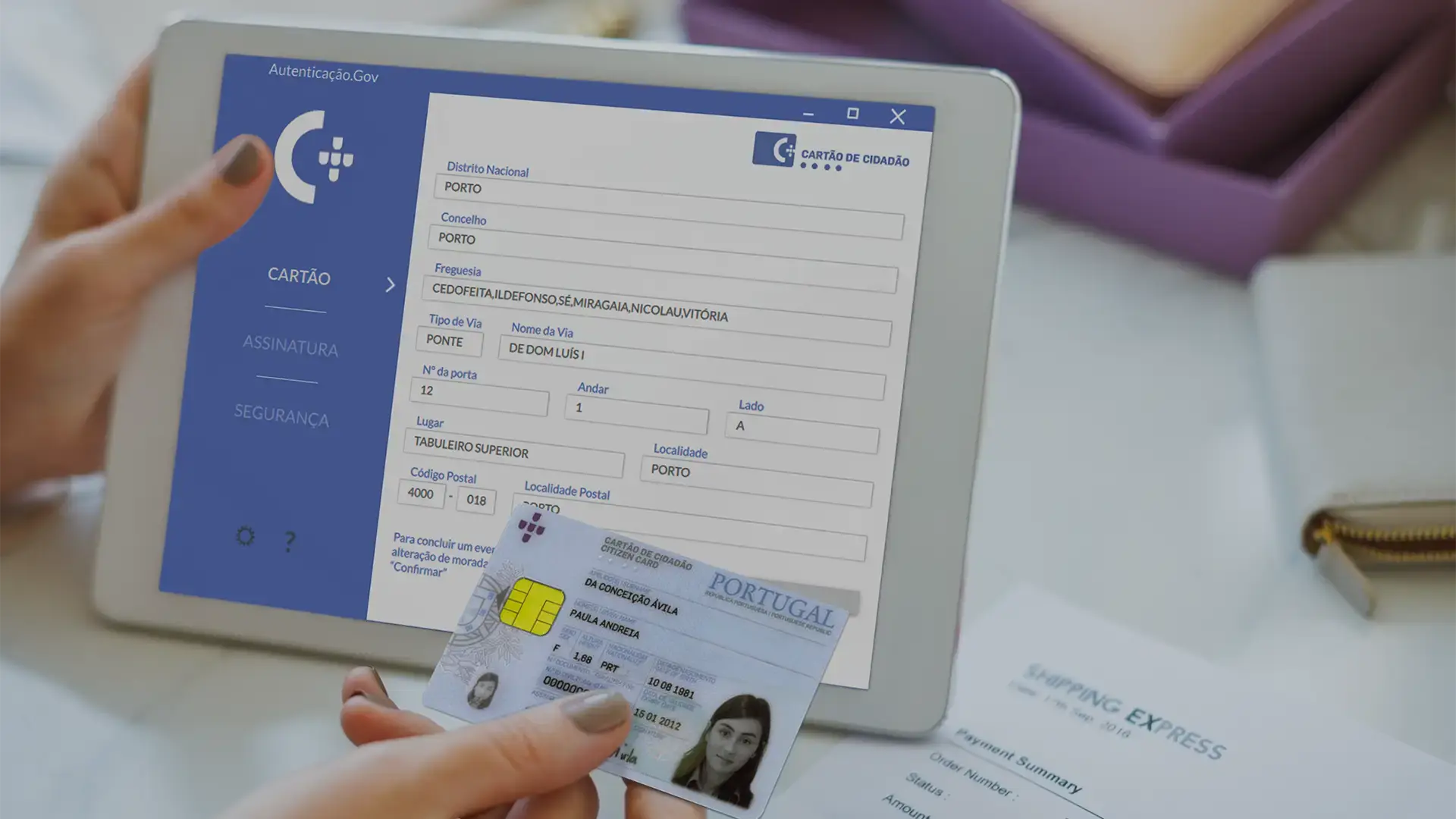
CRAV sits within a broader pattern of digital transformation work that Caixa Mágica has delivered for Portuguese public administration. Together with Digitarq, the Citizen Card Middleware, and the Order of Architects Portal, it demonstrates what is possible when public sector digital services are built with genuine attention to how citizens and staff actually use them.
Open-source foundations, clean integrations with national payment and authentication systems, and workflows designed around real operational needs: these are the characteristics that make a public sector platform sustainable rather than a short-term fix.
Responsive across all devices
CRAV works on mobile devices. This is not a minor detail for a public service platform. Many citizens, particularly those accessing services for the first time or from areas with limited desktop access, will use a phone or tablet. A platform that only functions well on a desktop excludes a meaningful portion of its intended audience.
Caixa Mágica built the interface to be fully responsive from the start, not retrofitted for mobile after the fact. Navigation, request forms, payment flows, and document viewing all adapt to the screen size of the device being used.