

Nearshore vs Offshore vs In-House: The Real Cost
Every nearshore vs offshore vs in-house comparison starts with a rate table, and every rate table gets the ranking wrong at least once.

AI Virtual Staging: How the Technology Works
The staff augmentation vs hiring comparison usually gets made between two numbers that measure different things: an annual salary and an hourly rate. Divide the salary by working hours and the employee looks dramatically cheaper. That division is where the reasoning fails.

Nearshore Rates in Portugal: Why €35 to €95 an Hour
There is a specific moment in most conversations about nearshore rates in Portugal where the numbers stop making sense. A buyer has seen €35 an hour in one place and €95 in another, for what looks like identical work, in the same country.

Public Tenders for SMEs: Compete Without a Bid Team
Large companies win public contracts with a team whose only job is finding and screening tenders. Most SMEs have one person who does it on top of a real job. That is the gap ConcursosGov closes for public tenders for SMEs: it does the finding and the first screening every day, so that one person can make the decisions in minutes instead of losing an afternoon to the portal.

How Much Does Custom Software Cost in Portugal?
October is budget season. It is also when the first questions about software development cost in Portugal arrive for next year, almost always in the same shape: roughly what does this cost?
The honest answer is that the question is built wrong, and not out of pedantry. An hourly rate of €35 from a supplier who needs 900 hours is more expensive than €55 from a supplier who needs 480. Quotes for the same specification routinely land three to one apart, and that gap does not come from the hourly rate.

Tender Alerts Tell You a Tender Exists. That Is Not Enough
Tender alerts solved the problem of the last decade: finding out that a notice exists. They send you everything that matches a keyword or a code, and for a while that felt like enough.

AI Test Case Generation: What Works and What Doesn’t
Generating tests from code and generating them from requirements are different operations with different failure modes. Generated tests reliably raise coverage. Whether they catch more faults is a separate question. The research answer is less flattering than the marketing.

AI Testing Tools: The Category Map and How to Choose
“AI testing tool” covers at least seven different products sold under one label. They solve different problems, cost different amounts and lock you in to different degrees. Four questions separate them better than any feature list.

ConcursosGov: from a Portal BASE notice to a bid decision
One tender, followed through ConcursosGov from the moment it appears on Portal BASE to the moment a team decides to bid. It covers the AI reading of the tender documents, the tender score and the decision log, using the real product at every step.

ConcursosGov: Caixa Mágica launches Portal BASE screening
Portuguese public tenders are all public, and companies still lose contracts that suited them. ConcursosGov turns the daily flow of Portal BASE notices into a short list a team can decide on in minutes. It is live now, with a 14-day trial.

What to Ask an AI Agency Before You Sign
The questions to ask an AI agency have almost nothing to do with models. Seven of them separate suppliers, because they are about documentation, about who answers to the regulator, and about what stays in your house when the contract ends.

AI Process Automation: Where Does It Pay Off?
It pays off when volume is high, exceptions are rare, rules are stable and the decision is reversible. It fails when any one of those four does not hold, and the cost shows up in maintenance rather than in the initial budget.

ISO 27001 for software companies
For a company whose product is code, most of ISO 27001 lands inside the delivery process rather than in policies and binders. That tells buyers which questions test whether a supplier’s certificate means anything. It also tells software companies how much of certification is engineering work.

NIS2 Supplier Requirements: 8 Contract Clauses
NIS2 supplier requirements changed who carries the risk. The obligation to manage supply chain security attaches to the covered entity, which means the security posture of whoever builds and maintains your software became part of your own exposure. If your supplier cannot evidence its practices, the finding lands on your side of the table.

How to Choose a Software Development Company
Start with what you can verify on your own, before speaking to anyone. The public list of PME Líder companies, the public contracts record on the Base portal, the open source the company publishes and its filed accounts. Four sources independent of any sales conversation.

Citizen Card v1 to v2: What Changed for Developers
Five things changed. Keys moved from RSA to ECDSA. Contactless reading arrived over ISO/IEC 14443, protected by the PACE protocol. A six-digit CAN code was introduced for contactless access. The chip contacts moved to the back of the card. And there is no API that tells you which version is in front of you.

Who Must Accept the EUDI Wallet by December 2027?
Eleven sectors are named in Article 5f(2) of the eIDAS Regulation as amended: transport, energy, banking, financial services, social security, health, drinking water, postal services, digital infrastructure, education and telecommunications. The deadline is 24 December 2027.

Document AI: Why Does It Fail in Production?
Because extraction is the easy part. What separates a demonstration from a production system is disambiguation, meaning knowing that three different spellings are the same entity and that two identical spellings are not, and knowing when the model should refuse to answer rather than risk it.

SD-JWT VC or ISO mdoc: Which Do You Build First?
You do not choose one. The EUDI framework requires support for both formats, so the real decision is sequencing. If your users present remotely, build SD-JWT VC first. If they present in person, build ISO mdoc first.

Can You Use the Portuguese Citizen Card to Authenticate Users in Your Own Application?
Every few months, we get the same question: can we authenticate users with the Portuguese Citizen Card directly in our own application? Yes. The official middleware is open source and supports the Cartão de Cidadão, Chave Móvel Digital and professional attribute certification.

Software Quality Evidence: The Gap That Costs
Software quality evidence is not the same thing as a testing programme, and the difference is what the first serious supervisory review tends to expose. Most regulated financial institutions have QA engineers, test suites, CI/CD pipelines and dashboards that show green. Far fewer have evidence.

Where Generative AI Visual Marketing Pays Off
The most useful question about generative AI visual marketing in 2026 is not what the tools can do, since that answer has become impossibly broad. It is where they create durable value rather than a productivity gain that evaporates once every competitor adopts the same tool.

Nearshore Portugal: The Compliance Case
Choosing a nearshore Portugal partner used to be a conversation about rates, time zones and English proficiency. In 2026 a fifth criterion appears in RFPs from regulated sectors with growing regularity: whether the development partner operates under the same regulatory framework as the client.

EUDI Wallet Relying Party: Integration Guide
Becoming a EUDI Wallet relying party is the part of eIDAS 2.0 that lands on engineering teams, and it is the part that has had the least attention. By 24 December 2026, every member state must make a compliant European Digital Identity Wallet available to its citizens and residents.

EU AI Act August 2026: What Actually Changed
The EU AI Act’s enforcement date was August 2, 2026. Most of the coverage this week focused on what was delayed: the postponement of the high-risk obligations for employment decisions, credit scoring, and access to public services to December 2027.

CRA September 2026: 24-Hour Vulnerability Reporting
From 11 September 2026, every software manufacturer selling into the EU has to report an actively exploited vulnerability within 24 hours of becoming aware of it. Not 24 business hours. Twenty-four hours.
Caixa Mágica Joins the Claude Partner Network
Caixa Mágica Software has joined the Claude Partner Network. This note explains what the partnership covers, how it fits our existing AI engineering work, and what it means for clients building on large language models under European regulatory constraints.

AI QA Testing for Regulated Industries: Qualiagentic vs. Generic AI Tools
When a QA team at a bank evaluates AI testing tools, the conversation tends to start with the same set of questions that any engineering team would ask: how many test cases does it generate, how accurate is the generation, how well does it handle test maintenance, what frameworks does it support. These are legitimate questions. They’re also the wrong starting point, because they treat the problem of AI-assisted QA at a regulated financial institution as though it were the same problem as AI-assisted QA at a SaaS startup. It isn’t.

eIDAS 2.0 Implementation Guide: What Organizations Need to Do Before December 2026
Every EU member state must make a compliant European Digital Identity Wallet available by 24 December 2026, and regulated companies must accept it twelve months later. This guide covers what organisations have to decide, build and register before those dates, written from the perspective of a team that has maintained national eID middleware since 2011.

DORA Resilience Testing in 2026: What QA Teams at Banks Need to Prove to Supervisors
DORA requires financial institutions to demonstrate operational resilience to supervisors, not simply to run tests. This article covers what QA teams at banks actually have to produce as evidence, which DORA articles govern it, and where most testing programmes fall short when a supervisory review arrives.
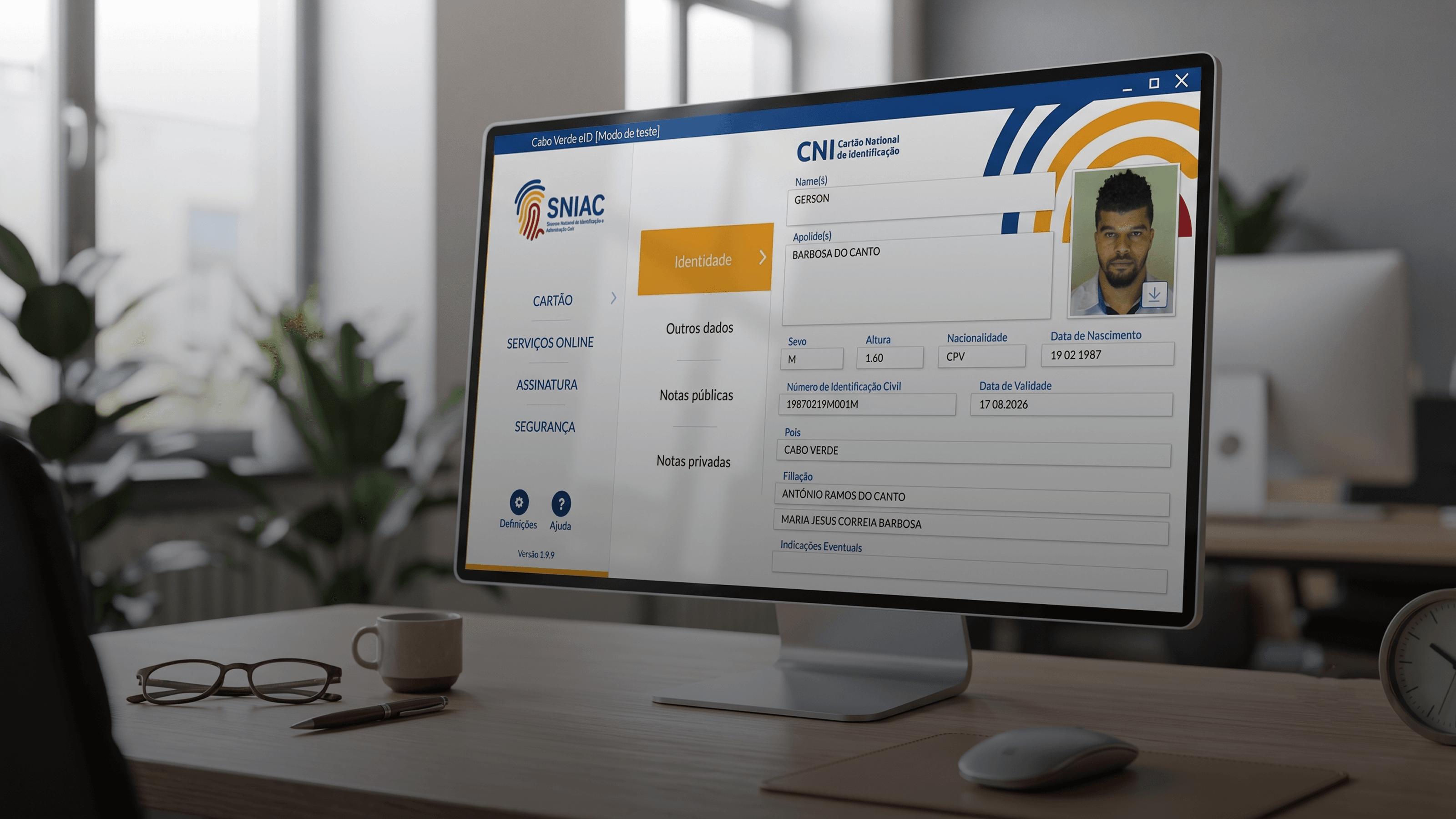
How Cabo Verde Built Digital Identity for an Archipelago
Most conversations about digital identity start from an assumption that’s rarely said out loud: that internet connectivity is stable, that service counters are close by, that population density turns infrastructure distribution into a problem solved by default. That’s a reasonable assumption in many European contexts. It simply doesn’t hold for a country like Cabo Verde — ten islands scattered across the Atlantic, where the distance between a citizen and the nearest public service can mean a boat trip, not a walk into town.

What LisbonID 2026 Told Us About the State of Digital Identity in Europe
Two days. Dozens of conversations. One consistent theme: the distance between policy ambition and operational reality is still significant and the organisations closing that gap are the ones worth watching.

AI Virtual Staging for Real Estate: The Complete Professional Guide (2026)
The gap between what real estate agents know they should do and what the economics allow them to do has defined property marketing for decades. AI virtual staging changes this calculation — not in theory, but in production, at scale, and right now.

AI Video Tours for Real Estate: How Stageless AI Is Turning Photos Into Cinematic Walkthroughs
For twenty years, still photographs defined what a professional listing looked like. Buyers have moved on — and the agents who recognise this first will operate with a structural competitive advantage. This month, Stageless AI changes what’s possible.

What Really Changes When Your Team Starts Using AI-Assisted Testing
Building Qualiagentic forced us to be precise about what actually shifts when AI enters the testing workflow — not what gets automated, but what gets rethought. That’s what we’re sharing here.

What Software Quality Actually Costs And Why Most Teams Are Measuring It Wrong
There is a version of the software quality conversation that most engineering teams have had many times. It goes roughly like this: testing coverage is too low, the QA process is too slow, the tools aren’t integrated well enough, and something needs to change before the next release. That conversation is useful as far as it goes.
Agentic AI for Software Quality: How Qualiagentic Makes Shift-Left Testing a Reality
Shift-left testing has been an ambition for a decade and rarely a reality, because writing tests early costs more than teams can absorb. Agentic AI changes that arithmetic. This article covers how Qualiagentic generates and maintains test suites from requirements, and what shifts when tests stop being a bottleneck.

Why We Built Stageless AI and What It Tells Us About Where Generative AI Creates Real Value
Not every industry needs a chatbot. The most significant near-term applications of generative AI are in sectors where the gap between expert-quality output and affordable production has historically been widest. Real estate visual marketing is one of them and it is where Stageless AI was born.

Caixa Mágica Summer Internships 2026
In the tech landscape of 2026, the definition of a “junior” has undergone a radical transformation. With Large Language Models (LLMs) and autonomous agents handling the bulk of boilerplate code and syntax debugging, the entry-level engineer is no longer a “coder” in the traditional sense. They are architects-in-training, problem solvers, and ethical guardians of the systems they build.

Attracting Tech Talent in 2026: Why Transparency and Open Source Matter More Than Ever
In a 2026 tech market increasingly automated by Artificial Intelligence, a paradox has emerged: human talent has become more valuable than ever. But what do young developers and engineers truly value today? As AI handles the routine, the new generation of talent seeks purpose, transparency, and the ability to contribute to something larger than a proprietary codebase.

Cyber Resilience in 2026: Navigating the CRA with Open Source and Secure by Design
In 2026, the Cyber Resilience Act (CRA) is no longer a future deadline, it is the operational reality for every organization in the European market. With mandatory security requirements for products with digital elements, compliance has shifted from a “nice-to-have” to a fundamental license to operate.

Tackling the AI Trends of 2026: Autonomous Agents, Domain-Specific Models and Responsible AI
Autonomous agents, domain-specific AI models, unified AI infrastructure and ethical governance are redefining how organizations operate.

Tackling the Tech Challenges of 2026: Innovation, AI and Cloud-Native Solutions
Rapid innovation, rising customer expectations and the need for secure, intelligent systems make traditional approaches insufficient in 2026. AI, cloud-native architectures and modern development practices have become essential to staying competitive.

Boosting Productivity and Business Intelligence with AI
AI-powered software development is transforming how businesses boost productivity, automate processes and make smarter decisions.

Implement AI for Portuguese Companies
Most Portuguese companies exploring AI stall at the same point: deciding what to build first and how to do it without exposing data. This article covers where AI adoption produces measurable return, what has to be in place before starting, and how on-premise deployment addresses data residency requirements.

Team Augmentation vs Outsourcing
Team augmentation and outsourcing are often used interchangeably and produce very different outcomes. Augmentation places engineers inside your team and your processes. Outsourcing transfers ownership of delivery. This article covers when each model fits, what each costs in management overhead, and how to choose.

Nearshoring in Portugal: The Smart Solution for Your Company’s Digital Growth
Portugal has become a nearshore destination for German, Dutch and UK companies for reasons that go beyond rates: EU membership, GDPR alignment, CET timezone and a shortage of senior engineers elsewhere in Europe. This article covers what nearshoring in Portugal delivers in practice, and what to check before choosing a partner.

Exploring the Future of Digital Identity in Amsterdam
Caixa Mágica Software had the pleasure of participating in Identity Week Europe 2025 in Amsterdam. One of Europe’s leading events dedicated to digital identity, biometrics and trust technologies.

Which is more secure? Open-Source or Proprietary Software?
When it comes to software security, the debate between open-source and proprietary models isn’t about which one claims to be safer. It’s about transparency, maintenance and how quickly issues are resolved.

Benefits of Team Augmentation
Team augmentation is redefining how companies scale. At Caixa Mágica Software, we provide on-demand tech talent to help businesses grow faster, stay flexible and deliver results without all the long-term overhead.

Magalhães: A Milestone in Portugal’s Digital Transformation
Magalhães marked a key step in Portugal’s digital inclusion, powered by Linux Caixa Mágica. Caixa Mágica Software continues this legacy through innovative IT solutions across Europe.

AI in Software Development
AI is reshaping software development, boosting productivity and innovation. At Caixa Mágica Software, our AI Lab drives this change, helping us build purposeful, future-ready technology.
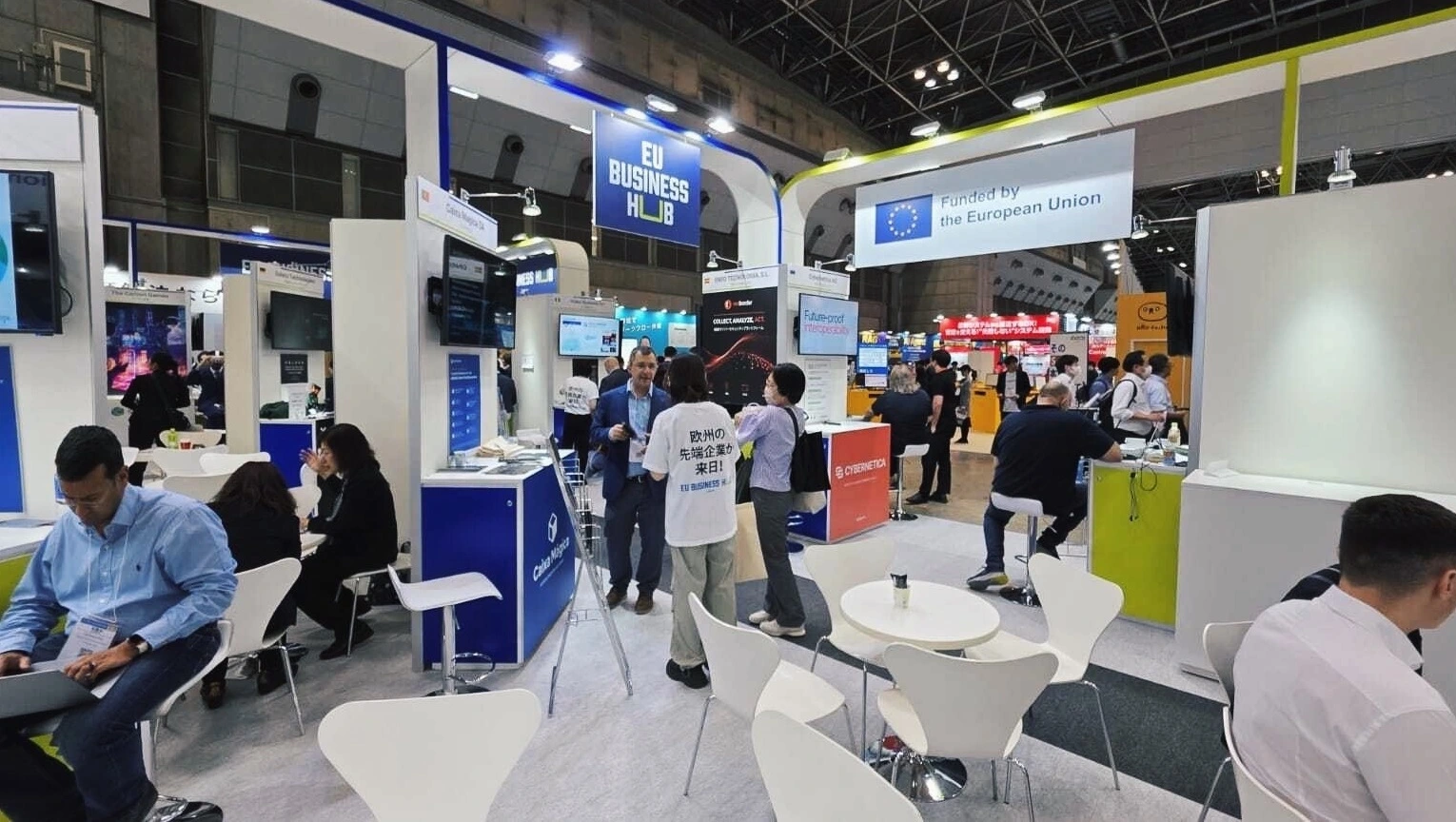
Caixa Mágica at Japan IT Week 2025
At Japan IT Week 2025, Caixa Mágica Software showcased Portuguese open-source innovation on a global stage, building international connections and exploring the future of digital transformation.
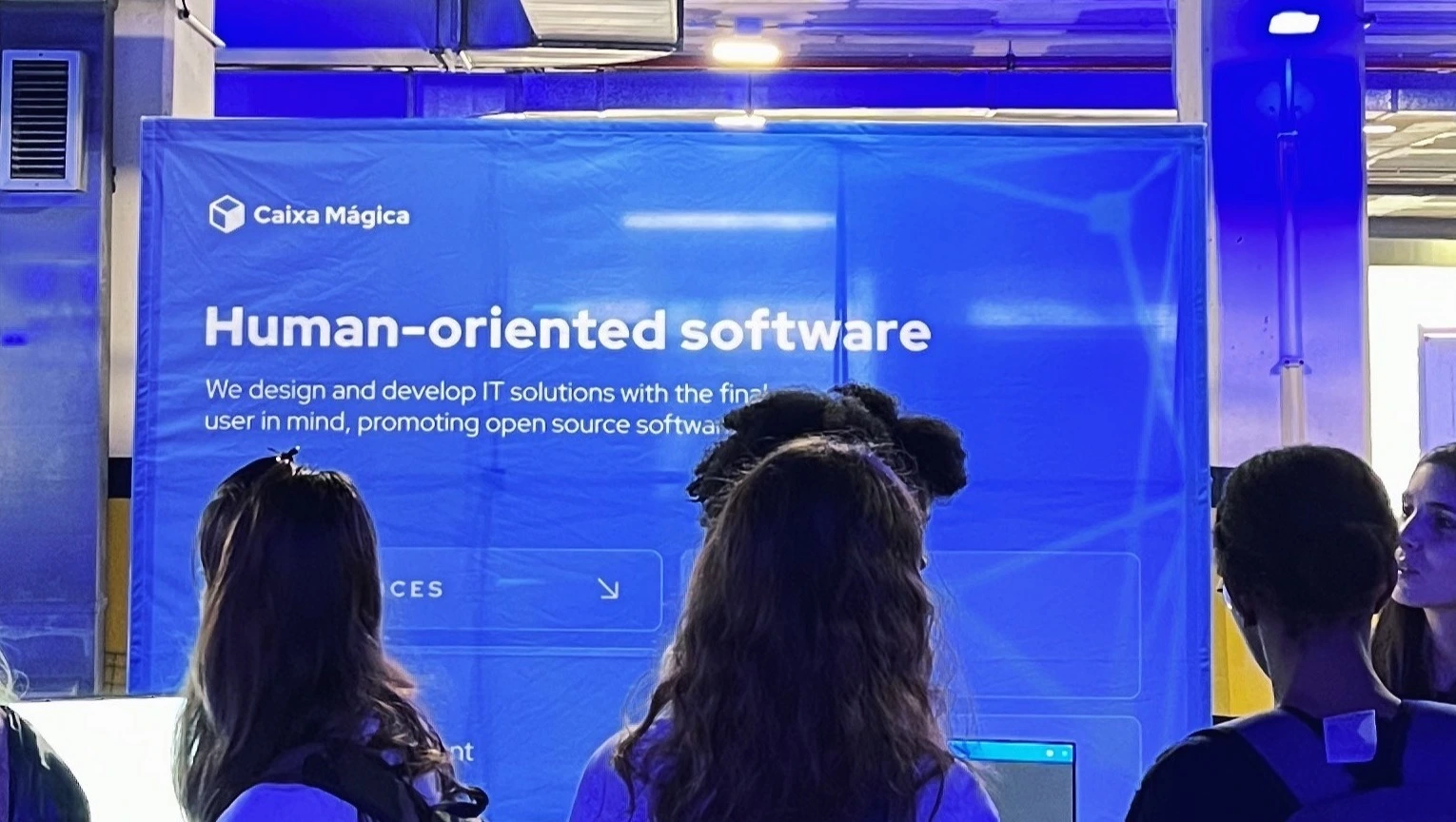
Connecting with Future Talent at FCUP Job(a)Fair 2025
At FCUP Job(a)Fair 2025, Caixa Mágica Software connected with future tech talent, sharing our work in innovation and open-source. It was a great moment to exchange ideas and meet the next generation of software professionals.

Caixa Mágica Summer Internships 2025
Caixa Mágica’s 2025 Summer Internships offer paid, hands-on experience in real tech projects. A unique chance for final-year students and recent grads to learn, grow, and make an impact from day one.
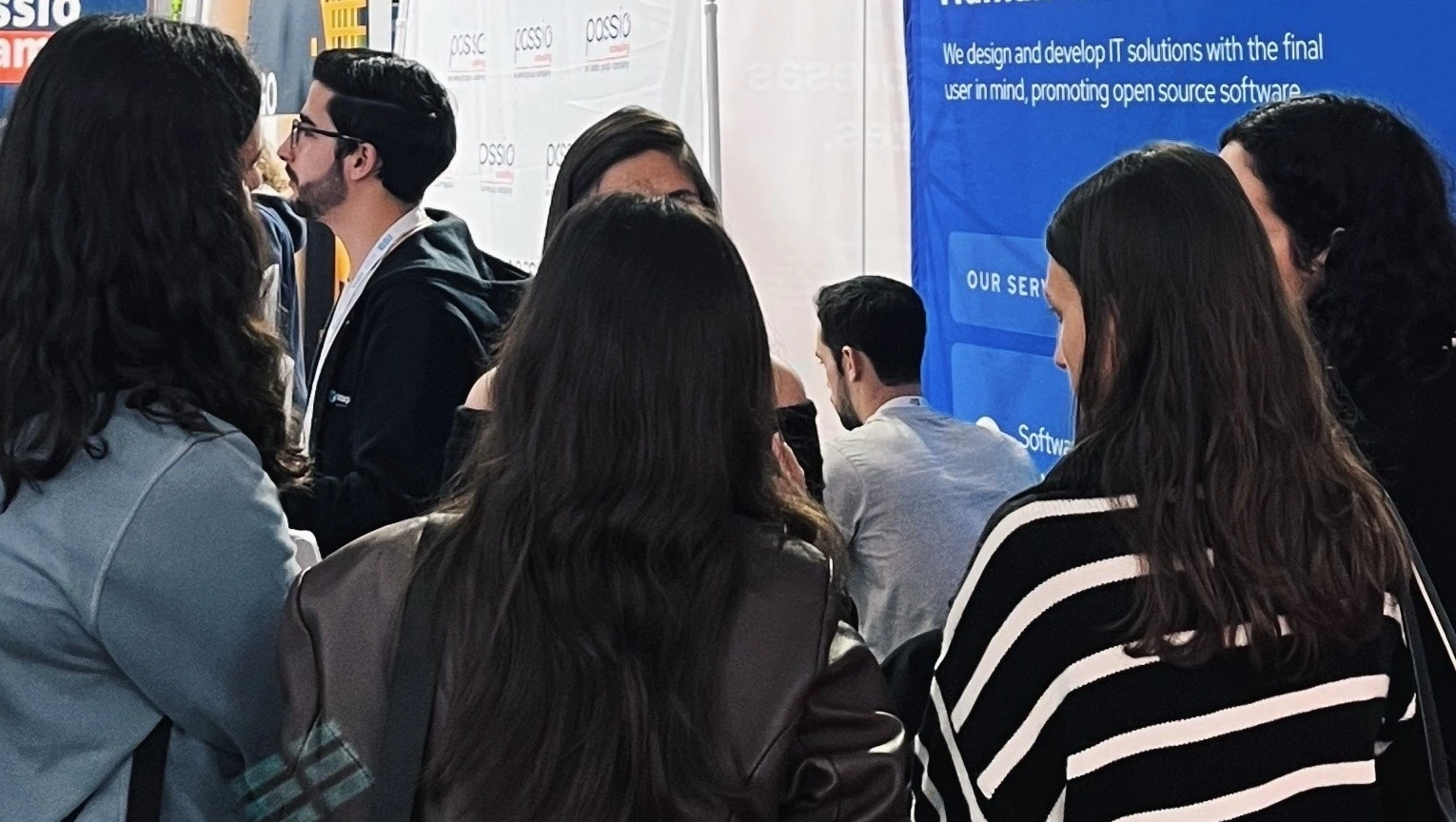
FISTA 2025: Meeting with Future Talent
At FISTA 2025, Caixa Mágica Software connected with future tech talent, sharing career paths and showcasing how our innovative projects are shaping industries and inspiring the next generation.
SINFO 2025: Discovering with the Future of Tech
At SINFO 2025, Caixa Mágica Software connected with aspiring tech professionals, shared our most innovative projects, and reinforced our commitment to building impactful technology with local talent and global vision.